Gender Equality in Olympic Medal Distribution: Progress and Remaining Gaps
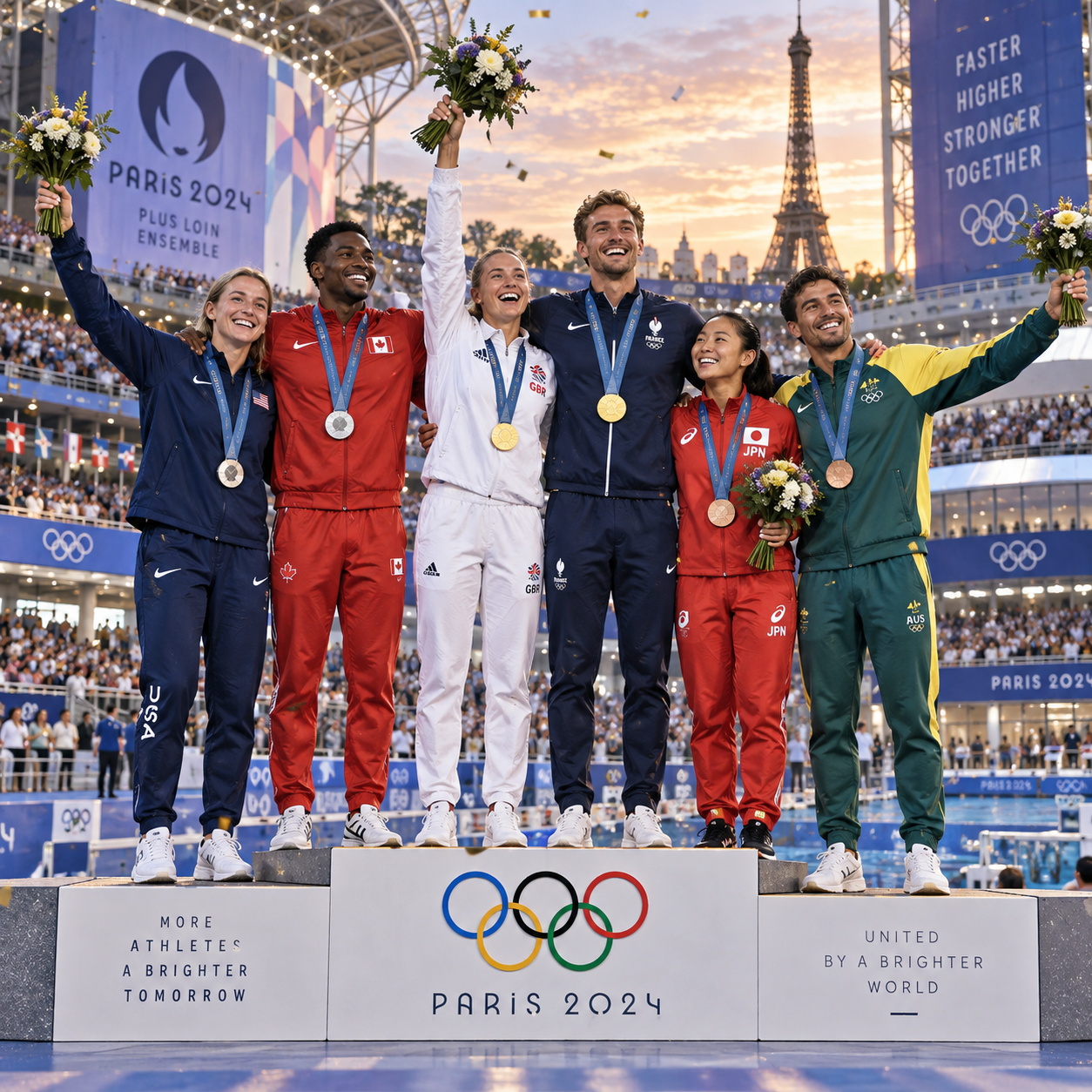
Olympic medal tables make it easy to compare results, but harder to explain what those results mean. Women athletes have gained access to far more Olympic events over time, yet medal totals alone cannot show whether the Olympic program offers equal opportunities to compete. To understand gender equality in medal distribution, it helps to look at participation, event access, and outcomes as related but distinct measures.
What Gender Equality in Olympic Medal Distribution Means
Gender equality in Olympic medal distribution means examining whether women and men have fair opportunities to enter Olympic events and compete for medals. It involves three separate questions: who participates, which events are available, and how medals are won.
Participation measures how many women and men compete. Event access asks whether athletes have comparable opportunities across sports and disciplines. Medal outcomes describe how medals are distributed after competition. These measures overlap, but none can stand in for the others.
For instance, a Games could approach parity in the number of women and men athletes while still offering more medal events in one category. Conversely, a balanced event program does not guarantee equal numbers of competitors, since qualification rules and national selection decisions affect who reaches the Games. Medal results also depend on the performance of athletes in each event.
So gender parity in athlete numbers is an important benchmark, not a complete verdict. A fair assessment considers the structure of the Olympic Games as well as the podium.
How Women’s Olympic Opportunities Have Expanded
Women’s Olympic opportunities have expanded through a gradual increase in the sports and events open to women. The modern Olympic program has moved from limited female participation toward broader inclusion across many disciplines.
That change affects medal distribution directly: when organizers add women’s events, they create more chances for women athletes to compete for Olympic medals. Growth has not followed one simple path. Each sport has its own history, competition formats, qualification systems, and pace of change.
Greater representation also shapes the experience of the Games. More women competing across a wider range of sports gives audiences a fuller view of elite athletic performance and can strengthen the visibility of women’s competition. At the same time, the number of events is only one part of access. Athletes need a competitive pathway, including clubs, coaching, suitable facilities, domestic competitions, and qualification opportunities, to make use of an Olympic event.
For reliable historical context, the International Olympic Committee’s Olympic history and records provide information about the Games and their evolving program. The broad direction is clear: women’s Olympic participation and event access have grown substantially, while questions about balance and support remain relevant.
Reading Medal Distribution Carefully
Medal distribution should be read in relation to the number and type of Olympic events available. A raw count of gold, silver, and bronze medals does not reveal whether women and men had the same number of chances to compete.
Each medal event can award up to three medals, but programs may differ in their event mix. One sport might offer several weight classes, distances, or apparatus events; another may have fewer. Team competitions create further complications: a medal goes to a team, though many athletes contribute to winning it. Counting medals, medal events, and individual medal-winning athletes can therefore produce different pictures.
A useful comparison checks four things:
- Event count: How many medal events were open to women and men?
- Format: Were the events comparable, or did one side have a different range of disciplines?
- Participation: How many competitors entered each event, and how did qualification shape the field?
- Outcomes: What share of available medals did women and men win?
Even these checks need care. Medals are team achievements in some events and individual results in others, and a small difference in totals may reflect a narrow program rather than a broad opportunity gap. The goal is not to explain away results, but to interpret them accurately.
Where Gaps Can Remain
Gaps can remain when women and men do not have comparable event access, representation, or routes into elite competition. Equal athlete numbers at a particular Games cannot, by themselves, show that these underlying conditions are equal.
One gap may sit inside the Olympic program: a sport can offer different numbers or types of events to women and men. Another can appear before qualification begins. In some countries or sports, women athletes may have fewer local competitions, less access to specialist coaching, or fewer chances to progress through national teams. Such barriers can narrow the pool of athletes who reach Olympic level.
Representation matters, too. If leadership and coaching roles in a sport are not broadly accessible, athletes may have less support or fewer visible role models. These conditions vary across sports and nations, so it would be misleading to assume that one explanation accounts for every difference in medal totals.
A useful distinction is between the competition-day result and the system that produces the field. The result reflects what happened at the Games. The system includes event design, qualification, and development opportunities leading up to them. Both deserve attention, but medal counts alone can only describe the first part.
The Role of Mixed-Gender Events
Mixed-gender events bring women and men onto the same team or into the same competition, creating shared opportunities for Olympic medals. They can also make cooperation between women and men athletes visible to audiences.
These events take different forms, including relays, team competitions, and formats where athletes of different genders contribute to a combined result. Their medal opportunity is shared rather than divided into separate women’s and men’s events. That can broaden participation within a sport, though the number of mixed events remains only one part of the overall program.
Mixed-gender events have limits as a measure of equality. Adding one can increase opportunities, but it does not automatically address an imbalance in other events, nor does it guarantee that athletes have equivalent access to training or qualification. The design must also make sense for the sport and give each athlete a meaningful role in the result.
In other words, mixed events are best understood as one tool for inclusion and visibility, not a substitute for reviewing the full schedule of Olympic events and the pathways that prepare athletes to compete.
What Further Progress Could Look Like
Further progress means checking event access and athlete pathways alongside gender balance in Olympic participation. A practical review should ask where opportunities are missing, how athletes qualify, and whether changes improve meaningful competition.
Organizers and sports bodies can use a straightforward three-part test:
- Review the program: Compare the number, format, and range of women’s and men’s medal events in each sport.
- Trace the pathway: Look at access to youth competition, coaching, facilities, and qualification events, rather than waiting until Olympic selection.
- Measure results in context: Report participation and medals alongside the number of available events and competitors.
Change involves trade-offs. Adding events can create more medal opportunities, but the Olympic program has practical limits, including scheduling and the overall size of the Games. A new event should therefore be assessed for sporting value, athlete demand, and whether it expands access without displacing other meaningful competition.
Clear reporting can help fans and decision-makers see what has changed and what has not. When medal distribution is considered alongside event design and competitive pathways, progress becomes easier to assess, and remaining gaps become more specific. That is a more useful measure of gender equality in Olympic sport than a medal table viewed in isolation.
Frequently Asked Questions
Does equal participation guarantee equal medal distribution?
No. Equal participation means women and men compete in similar numbers; medal totals also depend on event availability, qualification, team formats, and competition results.
How do Olympic event numbers affect medal comparisons?
More events create more opportunities to win medals. Comparing totals without counting available events can therefore make one group’s medal haul look larger simply because more medal events were offered.
What role do mixed-gender events play in gender equality?
Mixed-gender events allow women and men to compete together for a shared result. They can improve visibility and expand opportunities, but they do not replace balanced access across the full Olympic program.
Why can medal totals differ between women and men?
Totals can differ because of event numbers and formats, the athletes who qualify, team-event scoring, and results on competition day. A difference does not, by itself, prove a difference in ability or show whether opportunities were equal.