The Impact of Host Nation Advantage on Olympic Medal Counts
Every four years, when the Olympic flame arrives in a new city, something predictable happens: the host nation climbs the medal table. It's not coincidence, and it's not luck. A well-documented pattern across decades of Summer and Winter Games shows that hosting the Olympics gives a country a measurable performance boost — one that shows up clearly on any Olympic medal counter if you know what to look for.
What Is Host Nation Advantage in the Olympics?
Host nation advantage is the tendency for the country hosting the Olympic Games to win significantly more medals than it does in non-hosting years. The effect combines logistical, psychological, and structural factors that collectively tilt competitive outcomes in favor of home athletes.
This isn't unique to the Olympics — home advantage is a recognized phenomenon across team sports globally. But the Olympic version is particularly pronounced because it operates over a full two-week multi-sport event, affects hundreds of athletes across dozens of disciplines, and is amplified by years of deliberate national preparation.
For anyone using a medal tally tracker, understanding this effect is essential context. A host nation sitting unusually high on the leaderboard isn't necessarily a sign of a sudden sporting revolution — it may simply reflect the well-established dynamics of competing at home.
The Historical Pattern — Do Host Nations Really Win More Medals?
Yes, the pattern is real and consistent across modern Olympic history. Host nations reliably outperform their own baseline in both gold medals and total medal counts during the Games they host.
Consider a few illustrative examples drawn from broadly recognized outcomes:
- Sydney 2000: Australia finished fourth on the medal table — its best Summer Olympics result — with a gold medal haul that far exceeded its performance at Atlanta 1996 or Athens 2004.
- Beijing 2008: China topped the gold medal count for the first time, winning 51 golds on home soil. Four years later in London, that number dropped by more than half.
- London 2012: Great Britain finished third overall, its highest placement in over a century. At Rio 2016, performance remained strong but notably lower.
- Tokyo 2020: Japan recorded its best-ever Olympic medal haul — 27 golds and 58 total medals — a dramatic leap from its result at Rio 2016.
The pattern holds across different sporting cultures, different continents, and different economic contexts. That consistency is what makes host nation advantage a genuine analytical factor rather than a narrative convenience.
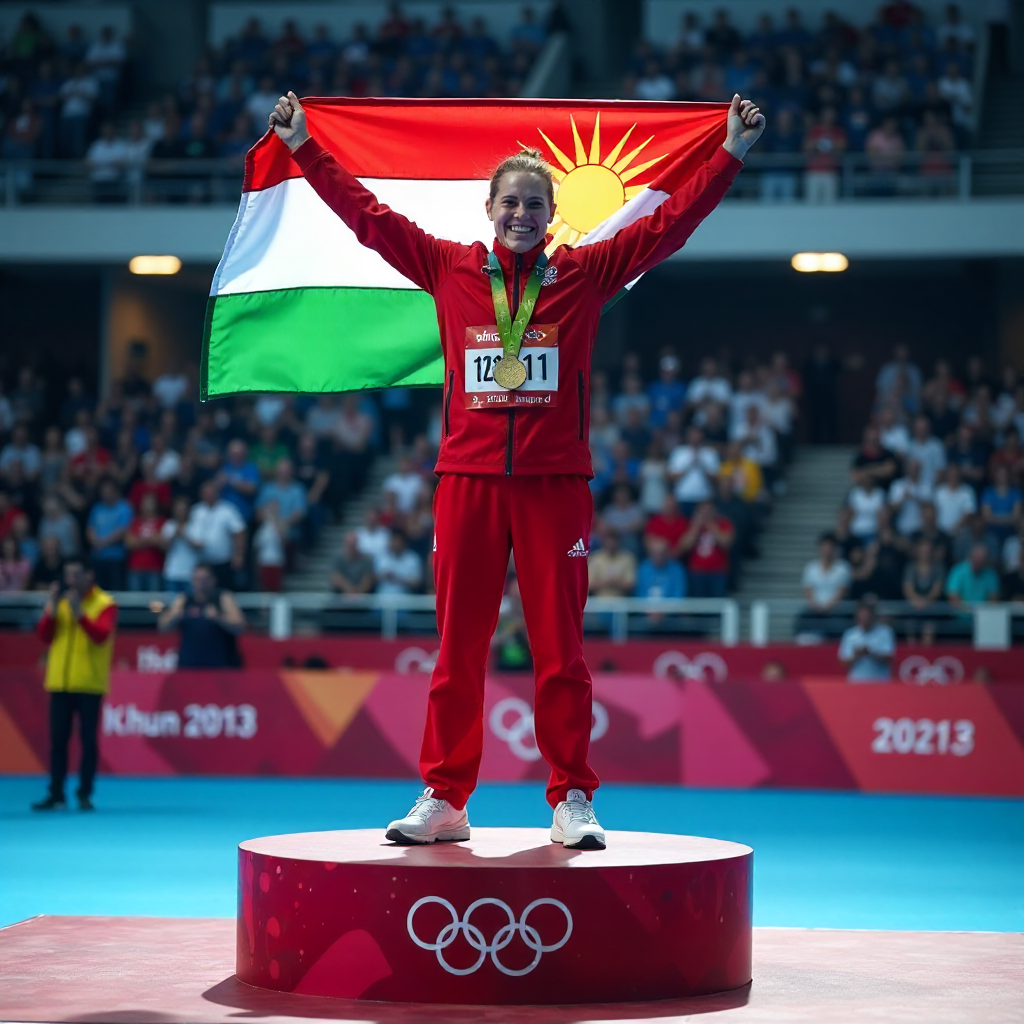
Key Factors Behind the Home Advantage Effect
The home advantage effect in the Olympics stems from several reinforcing factors, not a single cause. Breaking them down helps explain why the boost is so reliable.
Logistical Benefits
Athletes competing at home face none of the disorientation that affects international competitors. No long-haul flights, no jet lag, no unfamiliar food or sleeping conditions. They train in the actual venues months before the Games begin. These aren't trivial advantages — at elite level, where margins are measured in hundredths of a second, arriving rested and venue-familiar matters.
Crowd Support
The home crowd effect is perhaps the most visible factor. Tens of thousands of supporters chanting in your language, responding to your name, willing you through a difficult moment — that energy is real and measurable in sports psychology research. It raises arousal levels, delays fatigue perception, and can push an athlete through a performance plateau they might not clear in a neutral venue.
Referee and Judging Bias
This one is uncomfortable to acknowledge but documented in research. In sports with subjective scoring — gymnastics, boxing, diving, figure skating — judges have historically shown a modest but detectable bias toward home nation athletes. The effect is not dramatic, but in close competitions it can shift outcomes.
The Role of Pre-Olympic Investment and Sport Selection
Host nations don't just benefit passively — they actively engineer their advantage through strategic investment and, in some cases, lobbying for favorable sport programs. This is one of the less-discussed but most consequential aspects of the host nation effect.
Governments typically ramp up national sports investment in the years preceding the Games. Funding flows to training programs, coaching staff, sports science support, and athlete development pipelines. The UK's transformation under UK Sport's "no compromise" funding model ahead of London 2012 is a well-documented example of how targeted investment translates directly into medals.
Beyond funding, host nations have historically influenced which sports and disciplines appear on the Olympic program. Adding events that align with domestic athletic strengths — or removing ones where competitors are weak — can quietly inflate the medal opportunity pool. This structural manipulation of the Olympic Games program is a legitimate strategic tool, even if it rarely gets discussed alongside raw performance data.
When you see a host nation's medal count surge, ask how much of that reflects genuine athletic improvement versus a favorable competitive environment they helped design.
Psychological Edge — How the Home Crowd Influences Athletes
Sports psychology offers a nuanced picture of how crowd support affects athlete performance. The relationship isn't simply "more noise equals better results" — it's more complex than that.
For most athletes, competing in front of a supportive home crowd increases motivation and effort. The psychological mechanism involves social facilitation — the tendency to perform better on well-practiced tasks when observed by others. For elite Olympians whose routines are deeply ingrained, this effect is generally positive.
But the crowd also raises the emotional stakes. The fear of disappointing a home audience creates pressure that some athletes handle brilliantly and others find crushing. This is why host nation advantage in athlete performance metrics shows up clearly in aggregate data but doesn't apply uniformly to every individual. Some home athletes underperform precisely because the weight of expectation becomes too heavy.
The net effect across a full team, however, is positive. The athletes who thrive on crowd energy outnumber those who buckle under it, and the collective result is a medal count that trends upward.
Does the Advantage Fade After the Games?
In most cases, yes — host nations return closer to their historical baseline in the Games immediately following their hosting year. The post-hosting drop is a consistent pattern, though the degree varies significantly by country.
Nations with strong pre-existing sports infrastructure — like the United States, Russia, or Germany — tend to retain more of their gains because they were already near their performance ceiling. The hosting effect for these countries is smaller to begin with, and the post-hosting decline is similarly modest.
For nations that experienced a dramatic surge — like Australia after Sydney 2000 or Japan after Tokyo 2020 — the decline is more pronounced. The investment, the favorable draw, the crowd energy: all of that disappears. What remains is the underlying talent pool and infrastructure, which may have genuinely improved but rarely sustains peak-hosting performance levels.
There are exceptions. Great Britain maintained unusually strong results after London 2012, largely because UK Sport preserved its funding model and continued investing in high-performance programs. This suggests that the post-hosting fade is not inevitable — it's a policy choice as much as a natural correction.
How to Read Host Nation Performance on a Medal Counter
When tracking medal standings on an Olympic medal tracker, host nation context should inform how you interpret the data. A few practical principles help here.
First, compare the host nation's current performance against its own historical average, not just against other countries. If a nation typically finishes 12th on the gold medal table and is currently sitting 4th, that gap is the host effect in action — not a permanent shift in global sporting power.
Second, watch for sport-specific clustering. Host nations often spike in disciplines where they have invested heavily or where home crowd advantage is particularly strong — track cycling, swimming, combat sports, and gymnastics tend to show amplified home effects. If a country is dominating in sports outside its traditional strengths, that's worth noting.
Third, don't dismiss the host nation's performance as "artificial." The medals are real, the athletes earned them, and the conditions that produced those results — investment, preparation, crowd energy — are legitimate parts of competition. Host nation advantage isn't a cheat code; it's a structural feature of how the Olympic Games work.
Using a live medal counter without this context is like reading a stock chart without knowing there was a major policy announcement that day. The numbers are accurate; the interpretation requires background.
Frequently Asked Questions
Which country has benefited most from hosting the Olympics in terms of medals?
China's performance at Beijing 2008 is often cited as the most dramatic single-Games boost — topping the gold medal count in a way that far exceeded their pre- and post-hosting results. Australia at Sydney 2000 and Japan at Tokyo 2020 are other strong examples of nations whose medal tallies surged well above their historical norms during home Games.
Does host nation advantage apply equally to Summer and Winter Olympics?
The effect exists in both, but it tends to be more pronounced at the Summer Games due to larger athlete delegations, more medal events, and bigger crowds. Winter Olympics host nations benefit similarly in principle, but the smaller scale of the event limits the overall medal count impact.
How far in advance does a host nation start increasing its medal count?
Increased national investment typically begins 6-8 years before the Games, meaning performance improvements can appear at the preceding Olympics. The full effect peaks during the host year itself, with the Games immediately prior sometimes showing early signs of the investment surge.
Is home advantage stronger in certain sports than others?
Yes. Sports with subjective judging (gymnastics, diving, boxing) and those with strong crowd interaction (track and field, swimming) tend to show stronger home effects. Technical precision sports with objective outcomes — weightlifting, shooting — show smaller crowd-driven advantages.
Can a host nation's medal count be considered inflated compared to non-host years?
"Inflated" implies something artificial, which isn't quite accurate. The medals reflect real performances under real competitive conditions. But the conditions are genuinely more favorable for the host, so comparing a host-year medal count directly to non-host years without adjustment does overstate the nation's typical competitive level.